YOUR PHONG NHA TRAVEL GUIDE

Plan Your Trip to Phong Nha

A little planning. A lot to discover.

Build a journey around river caves, limestone landscapes and time to slow down. This guide brings together how to get to Phong Nha, when to visit, where to stay and how to organise your days.

Find your itinerary Ask us to plan your trip

START HERE

Choose your arrival

Compare flying, rail and road travel, then arrange the final journey to your accommodation.

MAKE ROOM

Plan 2–3 nights

Our suggested starting point for a first visit: time for caves, an easier day and a buffer around arrival.

TRAVEL YOUR WAY

Match the pace to your group

Choose gentle sightseeing, a private day or a specialist adventure, with the right arrangements for each.

01 / ARRIVAL

Getting to Phong Nha

Start your Phong Nha trip by separating the long-distance journey from the final transfer. Dong Hoi is the usual transport gateway, while your accommodation may be in central Phong Nha, along the river or farther into the countryside. A booking that gets you to Dong Hoi does not necessarily take you to your hotel.

Flying to Dong Hoi

Search for flights to Dong Hoi Airport when comparing your Vietnam route. Domestic links can be useful if you are starting from Hanoi or Ho Chi Minh City; check the airline’s current timetable for your exact date before building the rest of your itinerary around a flight.

Arrange the airport-to-accommodation journey separately. Send the driver your flight number, scheduled arrival, passenger count and luggage details. Confirm whether the quote covers waiting for a delayed flight and where you will meet. If you land late, book your first night and transfer before departure rather than relying on arrangements after arrival.

Taking the train to Dong Hoi

Dong Hoi station is served by trains travelling along Vietnam’s north–south railway. Rail can fit naturally into a route between Hanoi and central Vietnam, or between Hue, Da Nang and the Phong Nha area. Compare the arrival time and the accommodation check-in policy, as well as the ticket price.

An overnight train can save daytime travel hours, but an early arrival may leave you tired. Keep the first morning light: breakfast, a transfer and time to settle in. Ask whether your accommodation can store luggage before check-in. Confirm the current train, berth or seat type and cancellation conditions through the railway booking service.

Arriving by bus or private road transfer

If you are comparing buses from Hanoi, Ninh Binh, Hue or Da Nang, check that a service actually operates on your date and confirm its precise drop-off point. A ticket described as “Phong Nha” might still require a short onward journey. Ask about luggage, pickup instructions and how schedule changes are communicated.

A private road transfer is an option to discuss when you want a direct hotel-to-hotel journey or need space for a family and luggage. Agree on the route, planned stops and total price in advance. Keep a long transfer day separate from a demanding excursion unless your operator confirms that the timing works.

Before you book your arrival

  • Check the destination and pickup point written on the ticket.
  • Share the full hotel name and address, not just “Phong Nha”.
  • Allow time between arrival, transfer, check-in and any booked activity.
  • Keep your driver’s contact and accommodation address available offline.
  • Ask what happens if your train, flight or bus arrives late.

For a smoother start, send us your proposed arrival details before confirming a tour. We can discuss the order of your transfers and sightseeing so you do not spend the first day rushing from one booking to another.

Discuss my arrival & transfer

02 / SEASONS

Best Time to Visit Phong Nha

The best time to visit Phong Nha depends on what you want to do. A sightseeing trip, a walking day and a specialist cave expedition do not have identical weather requirements. Use the seasonal pattern as a starting point, then check the actual route conditions near your travel date.

April to June: a useful starting point for planning

Vietnam Tourism highlights April to June as a favourable period for visiting Phong Nha. If your dates are flexible, this is a sensible window to compare first. It still pays to plan for heat, showers and changes to an individual activity.

Build days with an early start, a proper lunch break and enough drinking water. Do not make every afternoon dependent on an outdoor activity. Choose accommodation where you will be comfortable during downtime, particularly if you are travelling with children or prefer a gentler pace.

July to September: plan around warmer conditions

This part of the year can be hotter. Think about the whole journey, including transfers, approaches to attractions and time waiting outside. A cave visit does not mean the entire day is spent underground.

Spread demanding activities across separate days where possible. Book transport that suits your group and carry sun protection for the exposed parts of the trip. If you are adding swimming or kayaking, ask about the current activity arrangements rather than assuming everything is included in an entrance ticket.

October to December: give your itinerary flexibility

The official tourism guide describes October to December as the usual rainy season, with a risk of flooding. River conditions and access can affect visits. This is a time to confirm the operating status of each attraction and to keep room for changes.

Ask your accommodation or operator about the exact route you intend to take. A forecast for the region cannot tell you whether a particular boat route, walking trail or adventure departure will run. Avoid paying for several tightly connected activities without understanding their weather-change policies.

December to February: bring extra layers

Cooler conditions can occur during these months. Pack a light warm layer and something dry to change into if your chosen itinerary includes water activities. Check room facilities and your own comfort preferences when choosing a place to stay.

For other dates, compare the expected conditions with the requirements of your chosen experiences. There is no single month that guarantees every cave route will be available.

A simple weather check before each day out

Confirm three things: is the site open, is your booked route operating, and is your transport still appropriate for the conditions? Then ask about an alternative if the original plan changes. A quieter local day or a rescheduled departure can be more enjoyable than trying to force a tightly packed itinerary.

Seasonal overview: Vietnam Tourism’s Phong Nha destination guide. Weather varies; confirm local conditions for your date.

03 / YOUR BASE

Where to Stay in Phong Nha

Where to stay in Phong Nha is a choice about how you want your trip to feel. A convenient base near restaurants makes independent evenings easier; a quieter property may be better for time by the pool or a slower morning. Consider your daily transport as carefully as the room photographs.

Central Phong Nha: start with convenience

Look at central accommodation if you want easier access to places to eat, meeting points and everyday services. Before booking, check walking distances on a map and ask whether your tour pickup includes the property. “Near Phong Nha” is not a precise location.

This is our suggested starting point for a short first visit or for travellers who do not want to organise transport every evening. Check recent comments about noise, stairs and room size, and request a quieter room if that matters to you.

Riverside accommodation: choose the setting carefully

If river views are a priority, confirm that the room category you are booking actually has that view. A riverside address does not guarantee every room faces the water. Ask about outdoor seating, meals and the practical journey to the boat departure area.

During wetter periods, ask the property about access arrangements and its approach to weather-related changes. Choose based on clear answers to your travel needs rather than relying only on a scenic photograph.

Countryside stays: make room for quiet time

A countryside base can suit travellers who want a slower rhythm. Check how you will get to dinner, how tour pickups work and whether transport needs to be booked in advance. Include those costs when comparing it with a more central room.

A two-night stay with no time at the property may not justify choosing somewhere primarily for its setting. If your accommodation is part of the experience, reserve an unplanned morning or afternoon to enjoy it.

Staying in Dong Hoi: connect your trip to an arrival or departure

Consider Dong Hoi when your transport timing makes it useful, or when you want to combine the Phong Nha area with time in Dong Hoi. Work out the transport for each sightseeing day before booking several nights. Repeated return journeys may be less convenient than moving your base.

For a longer visit, a split stay is worth discussing: one night around an arrival or departure, with the main cave days based in Phong Nha. Choose this only if changing hotels makes the overall journey easier.

Choose facilities that matter to your group

Families should confirm bed arrangements, child policies and any pool or balcony concerns. Couples may prioritise privacy and a quiet room. Solo travellers might prefer social spaces, while adventure travellers should ask about luggage storage and laundry between departures.

Before paying, check the exact room type, air-conditioning or heating arrangements, breakfast, pickup eligibility, check-in time and cancellation terms. If you have mobility needs, ask about the actual entrance, stairs and room access. Send your dates and preferences if you would like help comparing areas; specific properties and availability can then be discussed.

Ask about choosing a base

04 / YOUR DAYS

Suggested Phong Nha Itineraries

These suggested Phong Nha itineraries are planning ideas, not fixed departures or confirmed packages. Adjust them to your arrival time, the weather and the abilities of your group. The starting point below is simple: one main experience per half day, with time for transfers and meals.

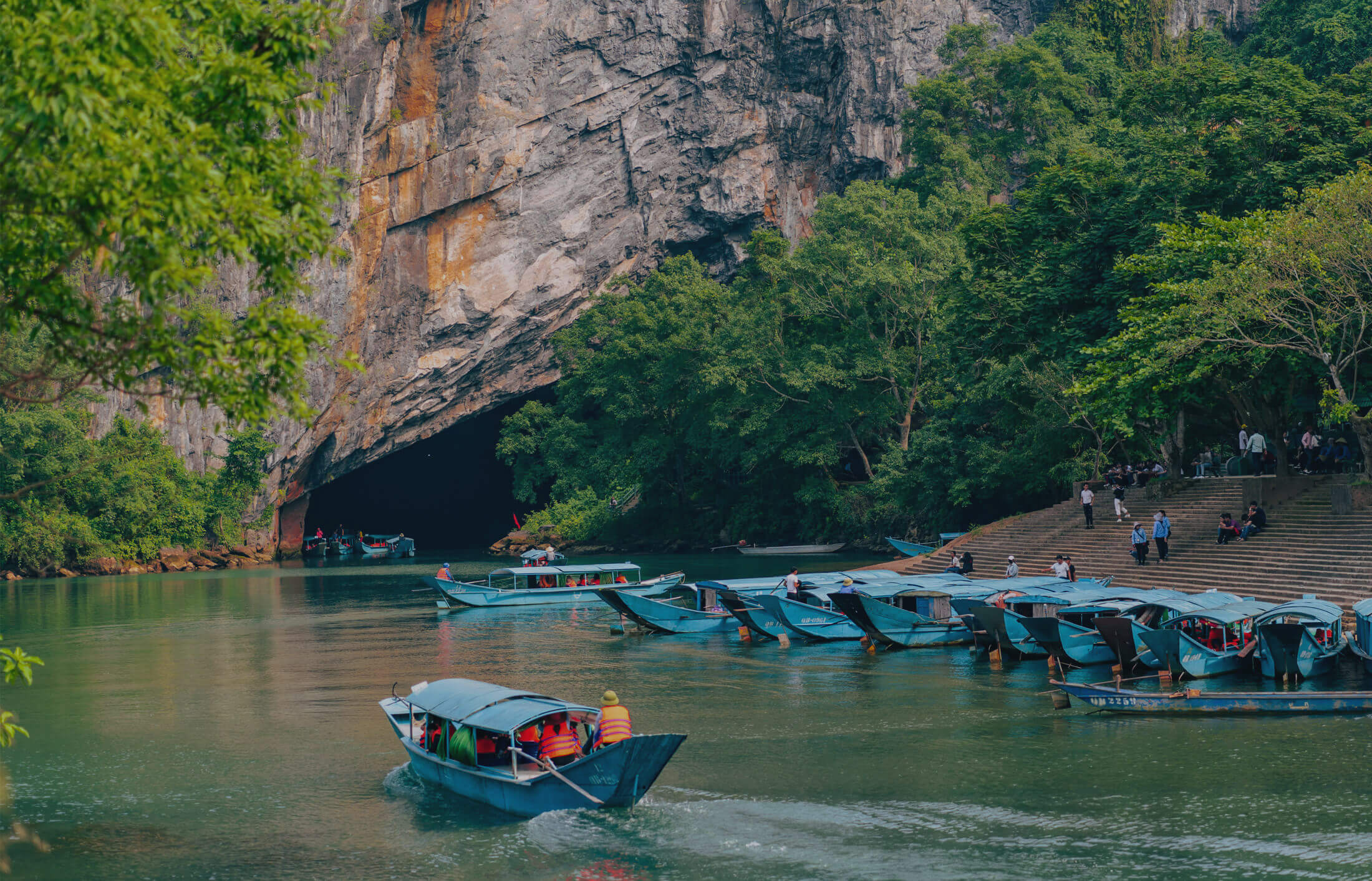
The standard Phong Nha Cave visit is published as approximately 2.5 hours. That excludes your journey to the departure area and any time needed to organise tickets. Read our Phong Nha Cave visitor guide for the boat route, current visitor information and practical tips.

For travellers with one full sightseeing day

One day: keep the cave as your main focus

Morning: start with the classic Phong Nha Cave visit when the route is operating. Confirm where to buy tickets and how your boat is arranged. Leave time to enjoy the approach instead of treating it as a quick stop.

Afternoon: have lunch and choose an easy local activity or time at your accommodation. If you want a second cave, discuss the travel and visit times first; combine destinations only when the schedule is comfortable.

Best planning choice: arrive the previous evening if possible. If you are arriving and departing on the same day, share both tickets before committing to a tour.

For a short first visit

Two days: two cave landscapes, with room between

Day 1: visit Phong Nha Cave, then spend the rest of the day at a relaxed pace. Use the afternoon for lunch, the village or a suitable local outing.

Day 2: make Paradise Cave the focus of a separate day. Discuss the walking involved and transport to and from your base. Add another stop only if it suits the conditions and your energy.

Best planning choice: avoid scheduling a long overnight transfer immediately after a demanding day if you can stay another night.

Our suggested starting point for more variety

Three days: caves, nature and an easier rhythm

Day 1: take the Phong Nha Cave sightseeing route and settle into your base.

Day 2: plan a Paradise Cave visit and a suitable nearby stop, with transport agreed in advance.

Day 3: discuss an active day at Chay River–Dark Cave or a nature outing such as Mooc Spring. Confirm the available activities and participation requirements. If your group prefers less activity, keep this as a countryside or rest day instead.

Best planning choice: leave one day interchangeable so your operator can suggest a better order when conditions change.

For travellers who want to go beyond sightseeing

Four days or more: include a specialist adventure

First: choose the specialist route and check its departure date, fitness requirements and operator briefing. Let those requirements shape the rest of your stay.

Before the adventure: allow time to arrive, rest and prepare. Confirm equipment, what to pack and where to leave extra luggage.

After the adventure: reserve a recovery day or an easier cave visit before continuing your Vietnam journey. The exact number of nights depends on the route; four days is not a universal fit for every expedition.

Best planning choice: do not treat an adventure route as a last-minute substitute for a standard sightseeing ticket.

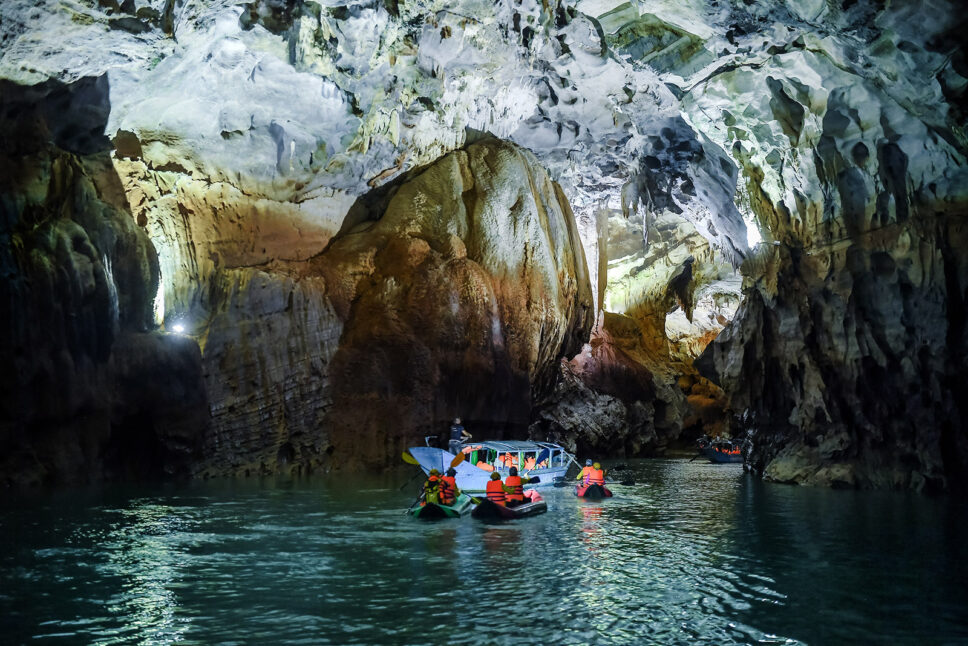
Phong Nha Cave

An underground river view in Phong Nha. Specialist water-based experiences have different requirements from the standard boat sightseeing route.

Find a tour for my itinerary Build my private itinerary

05 / GETTING AROUND

Transport & Transfers in Phong Nha

Transport in Phong Nha is easier to plan when you separate three needs: arrival and departure transfers, journeys between attractions, and shorter trips around your accommodation. Your best choice may be different for each part of the stay.

Airport and railway station transfers

For a Dong Hoi airport or station pickup, give the driver your actual flight or train number. Confirm the meeting point, vehicle size, luggage capacity and waiting policy in writing. If you need a child seat or have access requirements, ask whether the right arrangement is available before paying.

For departure, work backwards from your check-in or boarding needs, then allow a transport buffer. Do not assume the sightseeing vehicle can also take you to the station at any time; confirm whether that journey is included or a separate booking.

A private car with driver

Discuss a private vehicle when your group wants flexibility around meals, pickup and the pace of visits. The quote should explain the agreed route, duration, waiting time and what happens if you request extra stops.

A driver and an English-speaking guide are different services. If interpretation or detailed explanations matter to you, ask what guiding is included. Likewise, clarify whether attraction tickets, boats, meals and parking are part of the price rather than comparing quotes by a single headline figure.

Joining a tour with transport

A group tour can simplify a sightseeing day if its meeting point and programme suit you. Check whether your accommodation is inside the pickup area, the planned return time and the minimum or maximum participation requirements for activities.

Let the organiser know about onward travel before booking. A scheduled group departure may have limited flexibility, so choose an itinerary that leaves enough time to collect luggage and reach your next connection.

Short local journeys and cycling

Use your accommodation as the starting point for advice on short journeys. Ask about the actual route, road conditions and the return arrangement. For cycling, choose a distance that fits your ability and avoid assuming every road to an attraction is suitable for a casual ride.

Carry water, protect yourself from the sun and keep a local contact available. If a route becomes wet or unfamiliar, choose a simpler outing rather than pushing to complete a loop.

Motorbikes: check eligibility before choosing one

If you intend to ride, verify the licence requirements that apply to you, your insurance conditions and the rental agreement before making arrangements. Ask about the bike, helmet, route and conditions. If any part is unclear, discuss a car or guided transport alternative for that day.

Build a complete budget

Include arrival transfer, departure transfer, sightseeing transport, accommodation, meals, attraction admission and any separately charged boat or activity services. Keep a small allowance for a changed plan. Ask for written inclusions so you know which costs still need to be paid locally.

A useful enquiry includes your travel date, group size, luggage, pickup address, destination and expected departure time. Clear details make it easier to suggest a suitable vehicle and provide a relevant quote.

Request a transfer quote

06 / YOUR QUESTIONS

Planning Your Phong Nha Trip: FAQs

Use these answers to narrow down your plan. For questions about your exact date, route or group, send a trip enquiry so the details can be checked before you book.

We suggest starting with two or three nights for a first visit, depending on your transport times. That can give you separate sightseeing days and an easier arrival or departure. Specialist adventures may require a longer stay; confirm the actual programme before choosing your nights.

Compare the journey you would make each day. A Phong Nha base can suit several days focused on caves and the surrounding area. Dong Hoi may suit your transport timing or a stay that also includes time there. Choose the base that reduces unnecessary transfers.

Compare the seasonal overview above with the activities you want to book. April to June is a useful window to consider; wetter months require more flexibility. No month guarantees every route will run, so confirm local conditions and operator advice.

Discuss your dates and intended routes before booking. Ask whether each attraction is operating and what happens if conditions change. Build a flexible programme with clear cancellation or rescheduling arrangements rather than assuming one attraction can always replace another.

Ask about a combined itinerary for your date and starting point. The travel, walking, meals and your group’s pace all matter. With more time, separate days can feel more relaxed. Do not make a combination essential to a tight onward travel connection.

Send your date, arrival number, scheduled time, group size, luggage and accommodation address. We can discuss the arrangements you need and confirm availability and price before you book. Please mention any child-seat or access needs at the enquiry stage.

Only if it is listed in your booking inclusions. Airport pickup, local hotel pickup and a full sightseeing day are different services. Confirm each journey, plus guiding, entrance tickets, boats and meals, in writing.

Choose activities around your children’s needs and the practical requirements of the route. Ask about boarding, walking, supervision and any age or height rules. Tell the operator the children’s ages before booking, and leave time for meals and breaks.

Prioritise anything essential to your trip, especially a specialist adventure or an arrival transfer. For other activities, compare the benefit of confirming a place with the flexibility you want. Ask about availability and the applicable change terms for your date.

Pack comfortable clothing, suitable footwear, drinking water, sun protection, a light rain layer and a way to protect valuables from water. Add a warm layer when appropriate. Use the operator’s packing list for an adventure route rather than relying on a general sightseeing checklist.

No. Ask about the exact route and its inclusions. A photo of kayaking or swimming does not mean those activities belong to the standard visit. Confirm equipment, participation requirements and the services you are paying for.

Share your dates, arrival and departure details, number of adults and children, preferred accommodation area, interests, pace and approximate budget. Include any mobility or dietary needs. We can then discuss a programme and confirm the final services and price.

READY TO TRAVEL

A final check before you set off

Keep your arrival ticket, hotel address, transfer contact and activity confirmation together. Recheck the pickup point, ask about route operation and make sure your group understands the plan for the day.

Leave a little space in the itinerary. An enjoyable trip includes time for a meal, a change in weather and a moment to look around without watching the clock.

LET’S PUT YOUR PLAN TOGETHER

Make Phong Nha part of your Vietnam journey

Tell us when you are coming, how many people are travelling and the experiences you have in mind. We will discuss suitable options and confirm availability, inclusions and a quote before you book.

Include: travel dates · arrival & departure · group size · interests · preferred pace

Send a trip enquiry Explore our tours